
Reaching the Stans

“In Bible school, we asked a teacher which people groups are the most unreached in the whole world,” Heinrich related. “I was certain it would be Africa.”
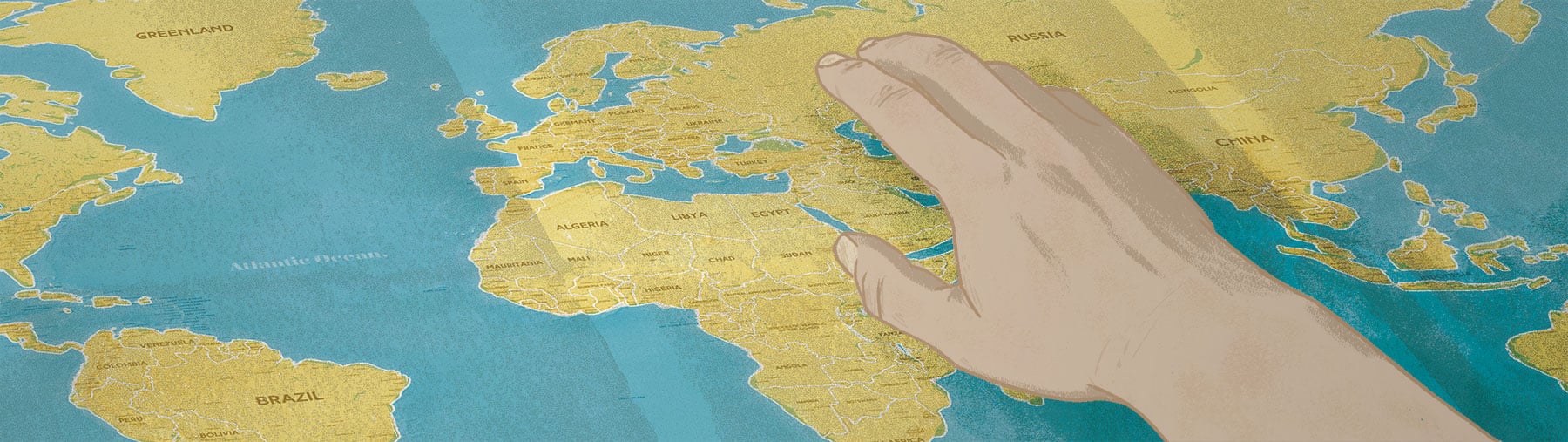
Instead, the guest teacher shared that the most unreached people group were the Turkic people of Central Asia. At the time, there was no known church and almost no known believers in Kazakhstan, Kyrgyzstan, Tajikistan, Turkmenistan, or Uzbekistan.
“This really struck me, because this is the region where I was born,” Heinrich paused.
“My parents were believers; my grandparents were believers. How could we live in the midst of the most unreached people in the whole world, and not bring them the Gospel?”
Multiply’s Heinrich Rempel, a third-generation Christian born in Tajikistan, never forgot that day in class. He and other students from Central Asia went on to form a group that prayed for the five “stans,” asking God for opportunities to bring the hope of the Gospel to these countries.
In desperate times, hearts open. And with open hearts, come open doors.
It was a season in Central Asia when hope was in short supply.
With the fall of the Soviet Union, infrastructure in Central Asian countries was falling apart—factories shut down, medical facilities closed, basic resources available only on the black market, unemployment rampant, and poverty at a critical level. Many were already living with a shortened life expectancy from exposure to nuclear waste.
In desperate times, hearts open. And with open hearts, come open doors.
So it was that in 1991, Heinrich and his new bride headed to Kyrgyzstan for what they would come to look back upon as their three-year, extended honeymoon. “We lived in a place with no shower, no heating, no running water,” he remembered, then smiled. “But it was just like our childhood, so not such a big burden!”
Meanwhile, Johann Matthies—a German seminary student at the time—received a call from believers in that same region.
“They told me, ‘We know about evangelism, but we have no idea about follow-up. Do you have any idea about follow-up ministry?’ And I said, ‘Barely.’ The next thing I knew, I was headed to Kazakhstan.”
For Johann, there was poignancy in being called by God to bring new life to a region where many of his mother’s family members had been killed. “I had history in Kazakhstan, and the history was not good,” he commented. “But because of that history, there was also an inbuilt empathy.”
His empathy was about to be challenged by the exhausting pace of ministry.
“I preached the Gospel fifty-five times in eleven weeks,” Johann declared. “Fifty-five sermons! I counted.”
It quickly became evident to both Johann and Heinrich that there was a critical lack of training resources needed to equip more nationals for the work of mission. And deterrents to mission in Kyrgyzstan and Kazakhstan were already not insubstantial.
“We wanted to help them to raise up a new missionary generation for Central Asia,” said Heinrich, “but there was no safe place for them to gather.”
Believers in Central Asia were facing the increasingly hostile opposition of new religious controls. Children known to be Christians faced bullying at school, with their mothers subjected to social ostracization. Outright bans on evangelism and proselytizing meant harsh punishments for any infraction: house arrest, community expulsion, even physical violence.
Despite this, Heinrich and Johann saw that believers not only continued to serve the Lord—quietly, faithfully, and often at great personal risk—but that there was increasing passion among the churches to be on mission, both within and beyond their borders. Several local churches are already working to reach those living in the Pamir mountains—an exceptionally high-altitude range spanning both Tajikistan and Kyrgyzstan.
In the face of such courage and faithfulness, Johann and Heinrich grew in their resolve to support these churches to fulfill their missional calling. “We wanted to help them to raise up a new missionary generation for Central Asia,” said Heinrich, “but there was no safe place for them to gather.”
The lack of a secure gathering venue was keeping discipleship fragmented, fellowship limited, and leaders stretched to their limit. A vision emerged to establish an accessible training center in Kyrgyzstan, where existing and emerging leaders could be resourced.
Construction of the Embrace Kyrgyzstan ministry and training center began—ready to provide a safe venue for local believers to gather, and a strategic base for local, regional, and international mission networks.
“Our prayer is that this center will be a place where believers can be encouraged,” Johann concluded. “A place to deepen their theological roots, receive leadership training, pray together, and be equipped to serve with wisdom and courage—in their own communities, and beyond.”
GIVE
You can help raise up a new missionary generation in Central Asia by supporting the Ministry and Training Center. Go here to learn more and to donate: multiply.net/embrace